
Public Relations Society of Malawi Commits to Supporting the Malawi 2063 Agenda
By Rachel Kalera Mhango, and Bantu Linje Manyozo
In releasing the Malawi 2063 Agenda, our government laid down the gauntlet to all citizens — to collectively build a Malawi that is “an inclusively wealthy and self-reliant industrialised upper-middle-income country.” To achieve this vision, the nation must develop a “vibrant knowledge-based economy.” This is where we, as the Public Relations Society of Malawi (PRSM), see our role.
This article highlights the opportunities our civic body has identified as key points of engagement with government policy-making and implementation — and how communication can serve as the driving force of transformation for the Malawi we want: a Malawi writ large, where, beyond our superficial differences, men and women alike make waves and write a shared story of wealth, equality, justice, peace, and unity.
During the 2025 PRSM Annual Conference, held from 30 October to 2 November in the vibrant city of Mzuzu and Nkhata Bay, communication professionals, brand leaders, media practitioners, academics, and students from across Malawi and beyond gathered under the theme “Building the Malawi We Want by 2063: Leveraging Strategic Communication as a Change Catalyst.”
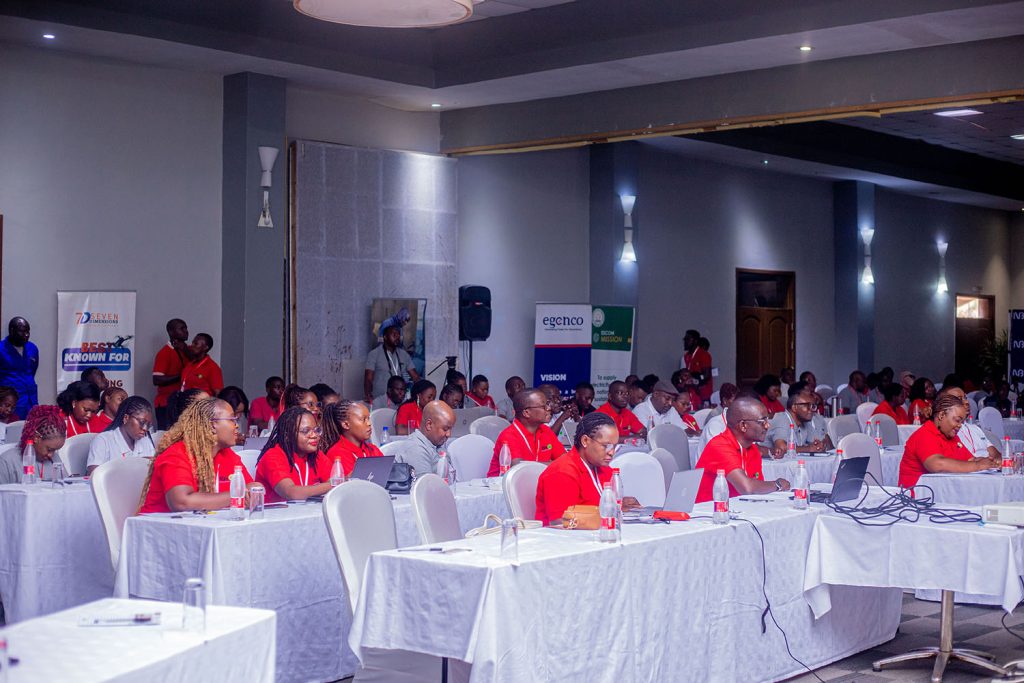
Communication professionals, brand leaders, media practitioners, academics, and students from across Malawi attend the 2025 PRSM Annual Conference, held from 30 October to 2 November Mzuzu and Nkhata Bay.
The urgency of the Malawi 2063 Agenda was palpable. From thought-provoking plenary discussions to community engagement, participants experienced firsthand the realities of Malawi’s development journey. A visit to Mzuzu’s markets offered a striking illustration: women selling nsima for MK5,000 a plate, having to purchase a 10kg gramil bucket of flour at MK30,000 every two days. “That is not our biggest struggle,” said one vendor. “It’s selling the food itself.” Another, Ms. Saka, showed her notebook — filled with names of customers buying on credit — and sighed, “It’s a struggle to collect from those who owe us.”
If Malawi 2063 seeks to generate sustainable, generational wealth, it is clear that we must start by amplifying the voices of the marginalised, who remain the backbone of local enterprise and storytelling within communities. This reality was symbolically reflected at PRSM’s Annual General Meeting, where the outgoing President Benson Linje paved the way for Rachel Kalera-Mhango, underscoring the society’s belief that communication and inclusive leadership are integral to national progress.
Upon election, Kalera-Mhango underscored a truth too often overlooked: no vision can be realised without communication. “Our next chapter will be defined by conversations that matter. Conversations that inspire action, professionalism, ethics, and strategy. Above all, conversations that position communication as the power shaping the Malawi we want.”
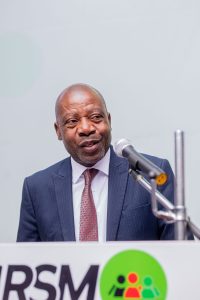
“We must make communication deliberate, not accidental. Citizens should not be mere recipients of information but active participants in shaping the national agenda.” Rashid Mtelera, Principal Secretary (Administration) in the Office of the President and Cabinet, challenged PR practitioners to make public communication proactive rather than reactive.
As Dr. Nora Quebral, the matriarch of development communication, once said: “Development communication is not just about sharing information. It is about enabling people to make meaning and take action.” This spirit echoed throughout the conference. The Guest of Honour, Mr Rashid Mtelera, Principal Secretary (Administration) in the Office of the President and Cabinet, challenged PR practitioners to make public communication proactive rather than reactive: “We must make communication deliberate, not accidental. Citizens should not be mere recipients of information but active participants in shaping the national agenda.”
In his Keynote Address, Dr Eddington Chilapondwa, Director General of the Public Procurement and Disposal of Assets Authority (PPDA), described communication as “the heartbeat of transformation.” He emphasised that “Strategic communication is central to Malawi’s development. It is through effective communication that vision becomes action and national aspirations become shared responsibility.”
Outgoing PRSM President Benson Linje added that, in times of transition, communication becomes the compass that helps navigate uncertainty, build trust, and inspire action. Whether in government policy rollouts, corporate restructuring, or community initiatives, he said, “clear, strategic communication is the bridge between vision and reality.”
The conference featured several thought-provoking sessions. Dr Linje Manyozo, a Lecturer at the Royal Melbourne Institute of Technology, reminded participants that “if communities do not trust us, nothing really works.” He urged practitioners to lead conversations, not merely manage them, arguing that communication is the compass that guides transformation.
Sophie Dambe, Assistant Clerk of Parliament, shared insights in her paper, “Driving Reforms through Communications: Taking Parliament to the People,” while Akossa Hiwa, Marketing and Corporate Affairs Manager at the National Bank of Malawi, in her session, “Communicating Change,” reminded participants that “change will be messy.” Citing a McKinsey report showing that 70% of transformation initiatives fail due to poor communication, she urged communicators to “turn complexity into clarity, fear into focus, and information into inspiration.”
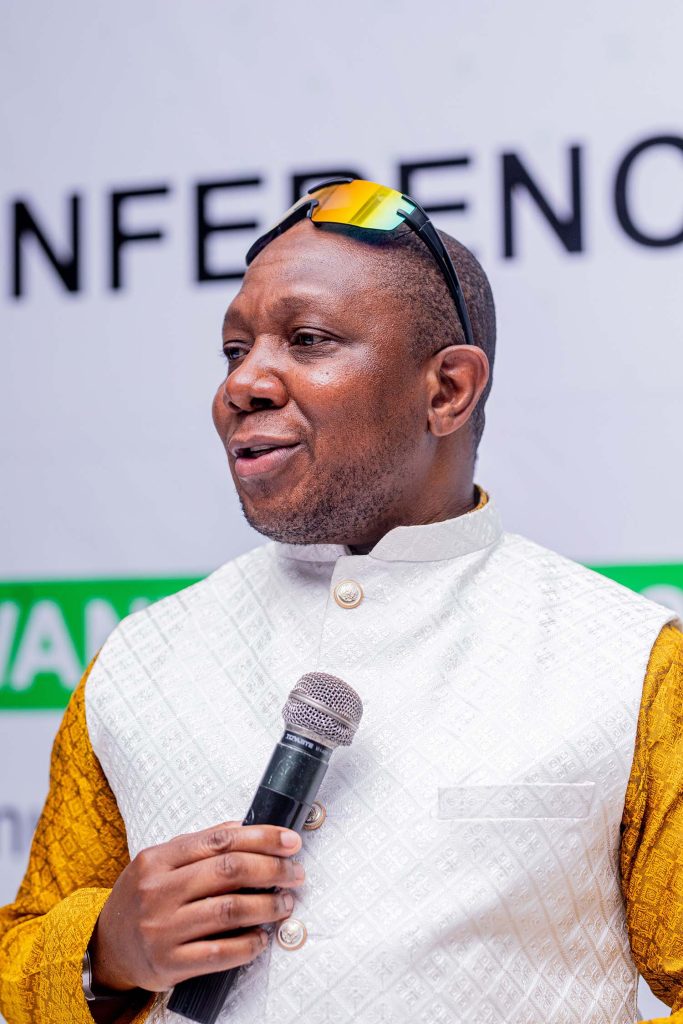
“If communities do not trust us, nothing really works.”Dr Linje Manyozo, a Lecturer at the Royal Melbourne Institute of Technology, urged practitioners to lead conversations, not merely manage them, in his session on the Role of Communications in National Development.
From Talk to Transformation: A Policy Call to Action
The conference reaffirmed that effective communication is not merely an operational function but a strategic pillar in achieving Malawi’s 2063 goals. Participants observed that the absence of structured communication frameworks within the government continues to undermine the public’s understanding of development priorities, reforms, and initiatives.
PRSM therefore calls for urgent action by the Office of the President and Cabinet and the Ministry of Information and Digitalisation to institutionalise and professionalise the public relations and communication function across the public service.
PRSM also plans to organise high-level retreats and dialogue sessions for Public Relations Officers and Controlling Officers across sectors, particularly within the public sector, to deepen appreciation for the strategic role communication plays in delivering Malawi 2063.
Participants raised concerns over the absence of legislation to regulate the profession, noting that this gap exposes the sector to inconsistencies in ethics and accountability. Encouragingly, PRSM has already drafted a position paper to guide the development of a Public Relations and Communication Bill, which will provide for professional registration, ethical standards, and continuous professional development. The society will continue engaging relevant stakeholders to finalise and present this Bill to Cabinet.
In addition, the evolving communication landscape, shaped by digitalisation and artificial intelligence, requires practitioners to upgrade their skills while preserving indigenous communication knowledge systems continually. PRSM is therefore designing capacity-building programmes to equip practitioners with competencies in digital communication, AI, data analytics, and culturally grounded storytelling.
Giving Back and Moving Forward
Recognising that communication is about connection, PRSM continued its tradition of community outreach. This year’s initiative supported Chikale Primary School in Nkhata Bay, recently ranked first nationally in the Primary School Leaving Certificate Examinations. PRSM refurbished over 100 desks and donated a year-long Nation newspaper subscription to promote a reading culture among learners.
The conference also marked a leadership transition, with Rachel Kalera-Mhango succeeding Benson Linje as President and Thomas Chafunya as Vice President. The new Executive includes Pilirani Phiri (Secretary General), Mzithembi Mbekeani (Vice Secretary), Wadza Otomani (Treasurer General), Yvonne Sundu (Vice Treasurer General), and Committee Members MacDonald Chapalata, Rita Makwangwala, Suzgo Khunga, and Faith Kamtambe.

As Malawi advances toward its vision of an inclusively wealthy and self-reliant nation, PRSM envisions a communication ecosystem that enables, inspires, and transforms. Newly elected PRSM President, Rachel Kalera Mhango commits to supporting the Malawi 2063 Agenda.
PRSM Drive for Malawi 2063
As Malawi advances toward its vision of an inclusively wealthy and self-reliant nation, PRSM envisions a communication ecosystem that enables, inspires, and transforms. Our commitment rests on the following pillars:
Embracing Digital Innovation: We aim to assist the government in designing digital innovation programmes, developing digital skills, and enhancing data analytics to foster economic development, human rights, and education. Our focus is on making these efforts more inclusive, participatory, and empowering, especially for marginalised groups.
Capacity Building and Networking: We aim to strengthen the development of new leadership in strategic communications and deliberative development. PRSM will become a hub for national and regional networking, bringing together government and bilateral partners, as well as civil society, to ensure that the implementation of both Africa 2063 and Malawi 2063 leaves no one behind.
Highlighting the transformative power of our indigenous knowledge: As PRSM, we envisage a national campaign that encourages every Malawian to rediscover, understand, and proudly embrace their country, its systems, history, and potential. Who owns Malawi? It is not merely a question of citizenship; it is a call to responsibility. It aims to inspire Malawians to comprehend how their country functions, its development structures, reforms, and aspirations, and to actively support the government’s efforts in public sector transformation and mindset change.
At the core of this campaign lies the transformative power of our indigenous knowledge systems. We recognise that while some traditions may have held us back and need re-examination, many others have shaped our resilience, unity, and sense of belonging. These practices connect us to our roots and remind us of the collective strength that defines us as a people. PRSM will lead in celebrating indigenous wisdom that promotes unity of purpose, social responsibility, and innovation — drawing inspiration from our past as we build a future where every Malawian is informed, engaged, and proud.
PRSM stands ready to serve as a thought leader and strategic partner in Malawi’s transformation, in that future, where we are equal, confident in our identity, and united in our pursuit of a free and prosperous Malawi.